Mogul App
- Product strategy and ideation
- UI/UX design and product development
- User research and in-person testing
- Branding and marketing for App Store launch
- 4.4 rating in the App Store
- 3,000+ downloads
- 500+ downloads at launch event alone
- Positive user response to calendar integration
When I joined Mogul, it was a social platform for women. The site had a forum-style community where women would post about career advice, job opportunities, goal setting, support, and really any topic. But the majority of the conversations centered around career growth and reaching personal goals.
Mogul was founded by Tiffany Pham, one of the first women to make the Forbes 30 Under 30 list. After that recognition, she had an outpouring of interest from women all over the world asking how she accomplished so much. That's how Mogul was born: a place for women to talk with each other about their struggles, wins, and learnings.
I was hired to work with the CTO to figure out how we could take this incredible community and build something new around it.
We interviewed dozens of the top Mogul community members to better understand who the core audience really was. We came to the conclusion that the Mogul user is someone who is a work in progress and wants to be the best version of themselves. Almost everyone we talked to wanted to do more in their life and reach certain goals, but they didn't have the right tools to help them get there.
Before our app, these users relied on basic lists and the notes app on their phone to track their goals. Their ambitions and personal todos lived in one place, and their busy work life lived in their calendar. The two were completely divorced from each other, and work always won. It was hard for people to make time for their personal goals because their calendar was full of work stuff and their goals were buried in a notes app somewhere.
We didn't jump straight to the final product. We went through several very different concepts and tested each one with real Mogul users. We even invited users to our office to test ideas in person so we could get a better gauge of their reactions.
Concept 1: Interactive Message Boards. The first version was a mobile take on the Mogul forums but more interactive. Posts and comments were written out in real time on screen to make users feel like they were having a live conversation. This created a sense of community but didn't really help people take action on their goals.
Concept 2: Meditative Gathering. We tried a more meditative approach where at the same time every day, users would gather on the app to focus on what they could do in their lives to reach their goals. It had a cool collective energy to it but was hard to make work with people's schedules.
Concept 3: VR Community Space. We even tested a VR concept where Mogul users could come together in an open virtual space in real time and talk openly about their goals and ideas. It was really cool but not practical as a daily tool.
Through all of this testing, one thing kept coming up: the community aspect was what made Mogul special. Whatever we built needed to make users feel like they weren't on their journey alone. That became the north star for the final direction.
We landed on a daily ritual format: an evening reflection and a morning focus session. The idea was that it felt like you were doing the same thing as all the other users on the app at the same time. It created a sense of community without needing everyone in the same room.
Evening Ritual. Each evening, the app guides you through three simple questions: What did you learn? What could you improve? What was your win? These questions came directly from Tiffany. They were the same questions she asked herself every day, and they were a big part of how she accomplished so much. Taking a few minutes to reflect this way helps build a growth mindset and sets you up for a better tomorrow.
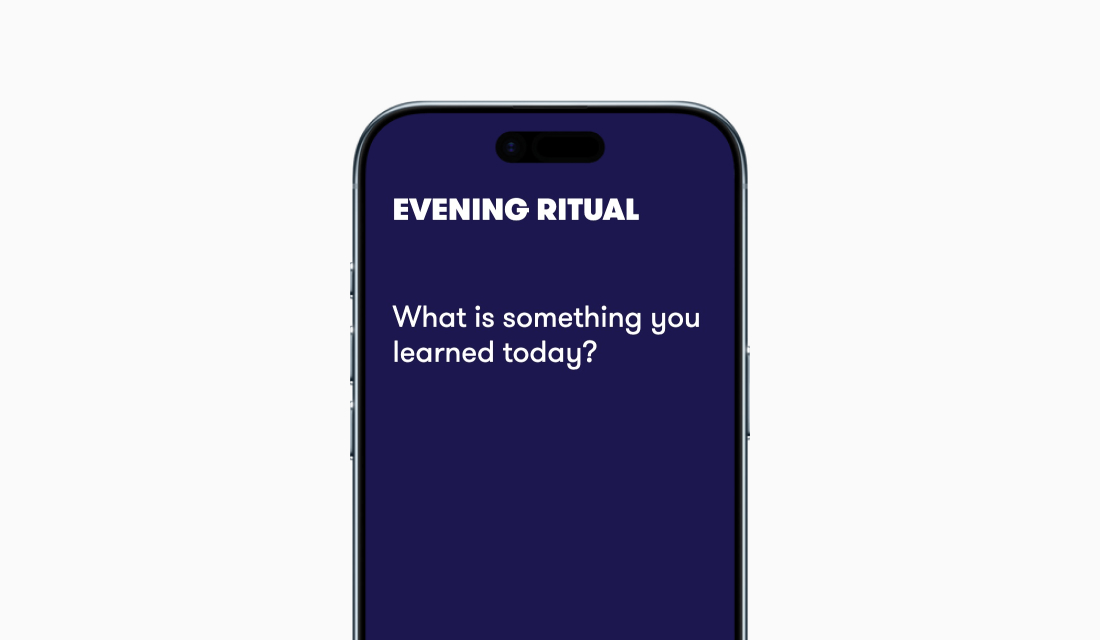
Planning Tomorrow. After finishing the evening questions, users plan their next day. This is where the calendar feature comes in. The CTO and I spent a long time figuring out how to marry the work calendar with a personal todo list. We came up with a drag-and-drop interface where users could add or adjust their goals and todos, then drag them right into their calendar to create a schedule that works for them.
This was a big deal because it solved the core problem we found in research: goals and ambitions were living in a notes app, completely separate from the calendar that ran their day. By combining the two, users could actually carve out time for the things that mattered to them instead of letting work fill up every hour.
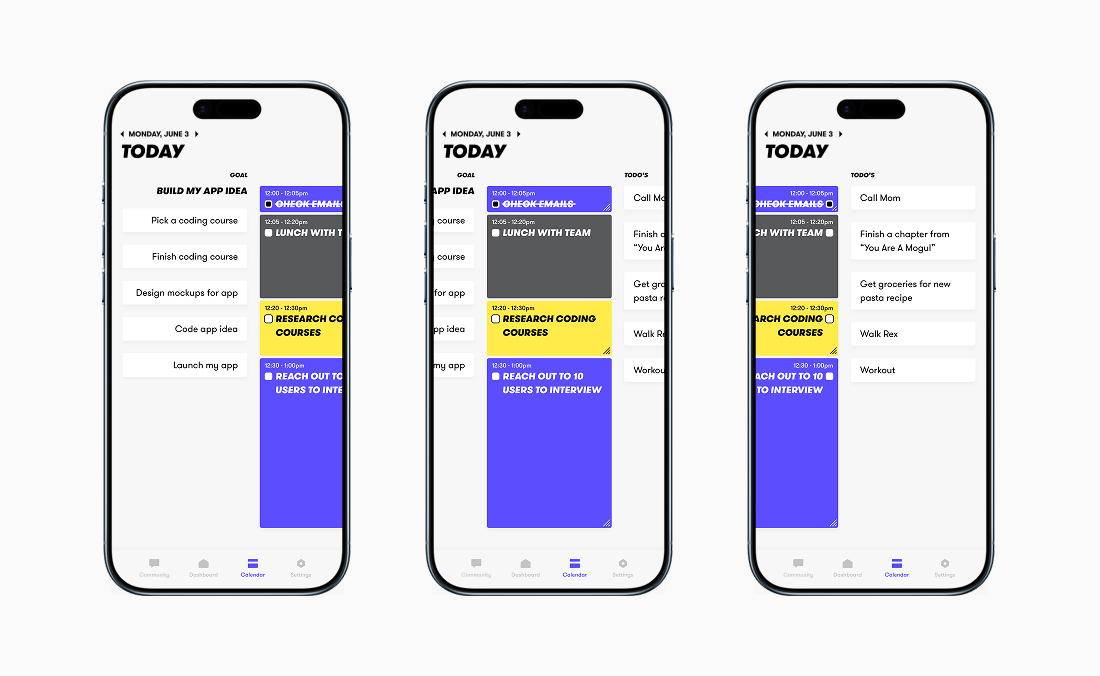
The biggest challenge we ran into was calendar connectivity. Some users had to get permission from their work IT departments to connect their work email calendar to our app, and some weren't able to because of security restrictions. Those users ended up using the calendar feature to schedule goal todos into their phone calendar instead, which was still way better than having everything buried in the notes app.
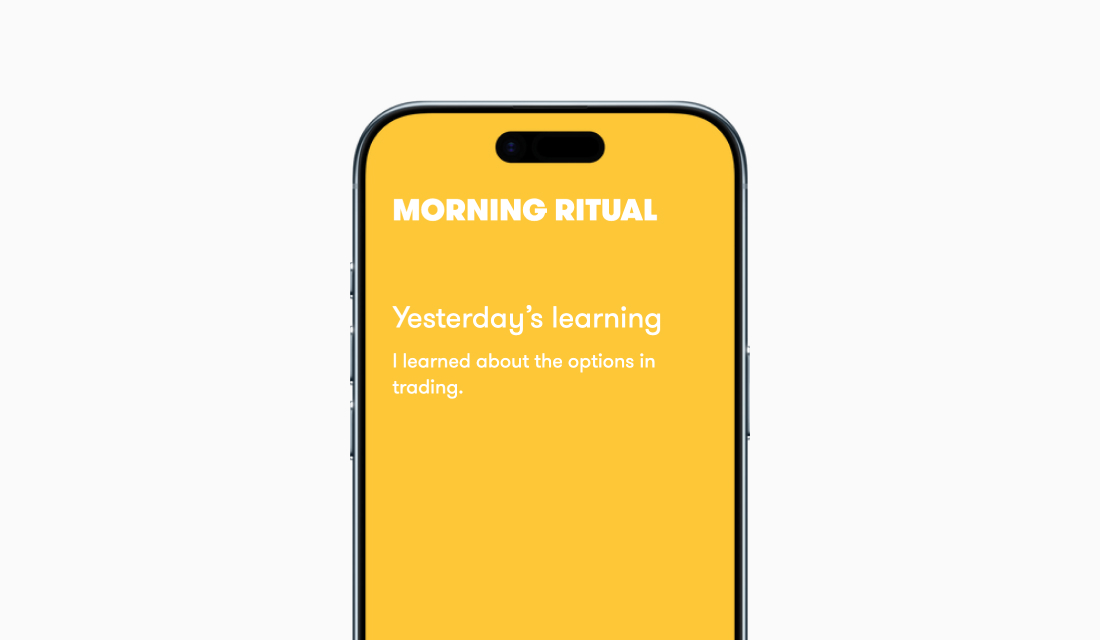
Morning Ritual. Every morning, users get a clear overview of their day: their goals, their schedule, and a reminder of what they reflected on the night before. It's a focused starting point to help them go into the day with intention.
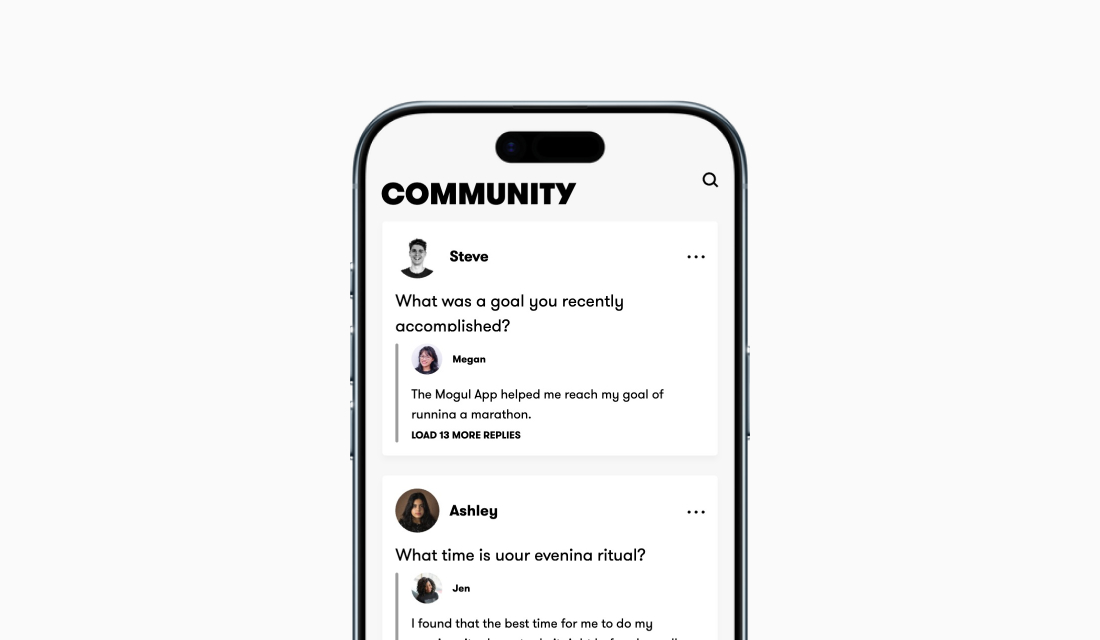
Community. Throughout the app, users could see that other people were on the same journey. Whether it was knowing others were doing their evening ritual at the same time or seeing community activity, it reinforced the feeling that you're not doing this alone.
This was my first time designing a native mobile app that would go on the App Store. That meant thinking about a lot of things I hadn't dealt with before: App Store guidelines, branding at the app icon level, marketing screenshots, and making sure the experience felt right for mobile rather than just shrinking a web experience down.
I worked closely with the CTO throughout the process. We'd ideate together, I'd design and prototype, we'd test with users, and then iterate. The in-person testing sessions at our office were especially valuable because we could watch people interact with the prototypes in real time and pick up on things that surveys or remote feedback would miss.
We officially launched the app at the Mogul X conference and had over 500 downloads at the event alone. The app went on to reach 3,000+ total downloads and earned a 4.4 rating in the App Store.
The calendar feature and the evening ritual got the strongest positive response from users. People really appreciated having a structured way to reflect on their day and plan for tomorrow, and the drag-and-drop calendar gave them something they couldn't get from a notes app and calendar living as two separate tools.
After about a year, we made the difficult decision to sunset the app. Our team was small and we needed to shift our full focus to the recruiter tool, which was becoming the core revenue driver for the company. It was the right business decision but it's one of those things that's still bittersweet because the community we built was really special.
I wish there was a way for us to have kept the Mogul community going and helped it grow further. The community was the heart of everything we built, and sunsetting the app meant losing that daily touchpoint with users. Our team just had bigger things to focus on at the time since the recruiter software was how we were starting to make real money. But if I could go back, I would have explored ways to keep the community alive in a lighter-weight format, even if the full app couldn't be maintained.